AIR ENTERS
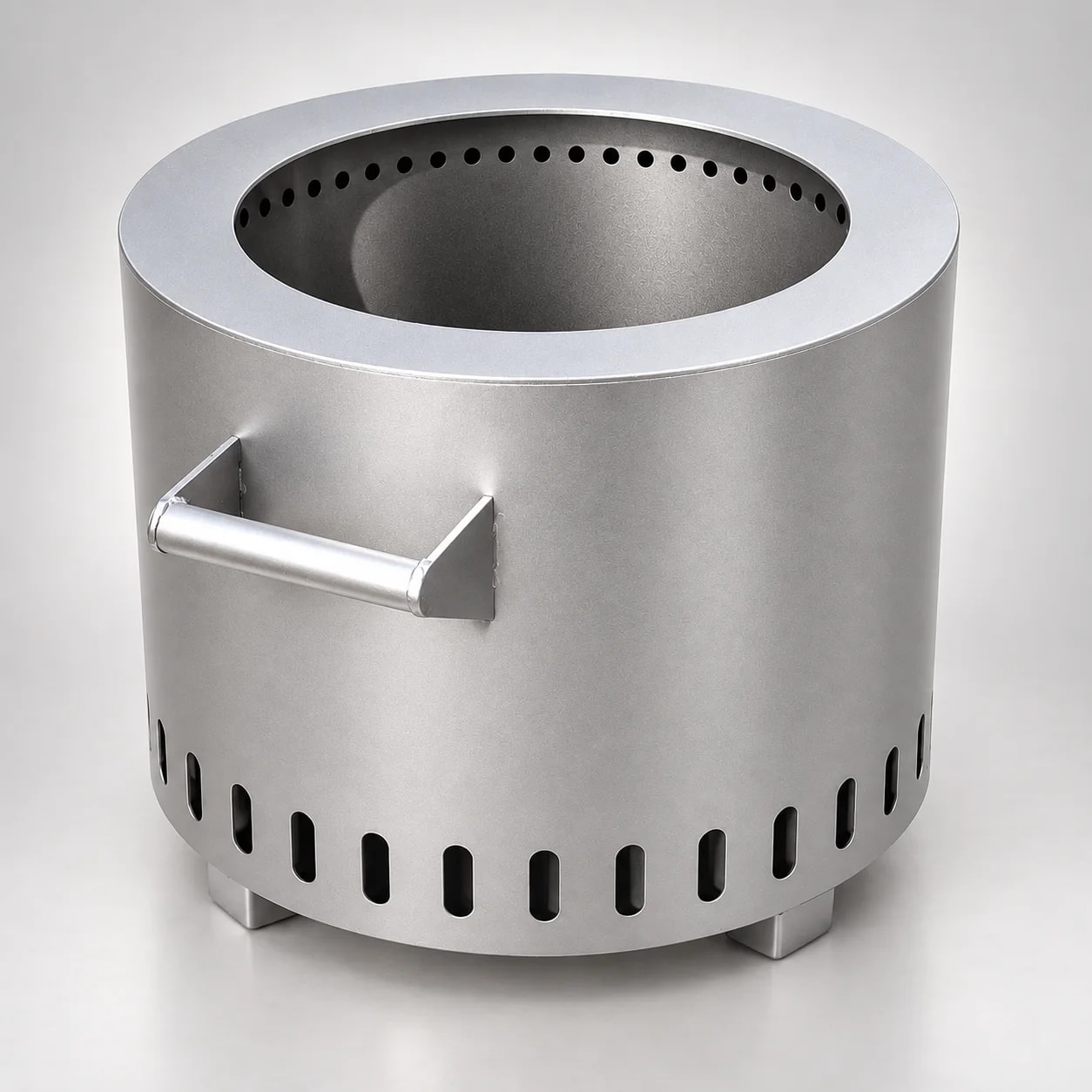
Fresh air enters through the rounded lower ventilation slots.
Every ESFIRE product begins with the same element — fire. What changes is how we guide the air around it, concentrate the combustion and put the resulting heat to work.
A continuous route carries fresh air from the lower vents into the fire and through the double-wall cavity, where it gains heat before returning near the upper combustion zone.
The Smokeless Bonfire uses its geometry to keep fresh air moving through the fire. Air entering close to the base supports the primary burn, while a second stream travels through the double-wall cavity and gains heat. Near the upper rim, that preheated air is introduced back into the combustion zone, encouraging a secondary burn of hot gases above the wood.
Fresh air enters through the rounded lower ventilation slots.
A second stream rises and gains heat inside the double-wall channel.
Preheated oxygen returns through upper ports near the hot gases.
Combustion warms the open flame and surrounding metal body.
For the secondary burn to develop properly, the fire needs to come up to temperature. Dry seasoned wood and unobstructed airflow give the system its best operating conditions.
Only the visible, functional parts of the real product are identified here.
 01020304050607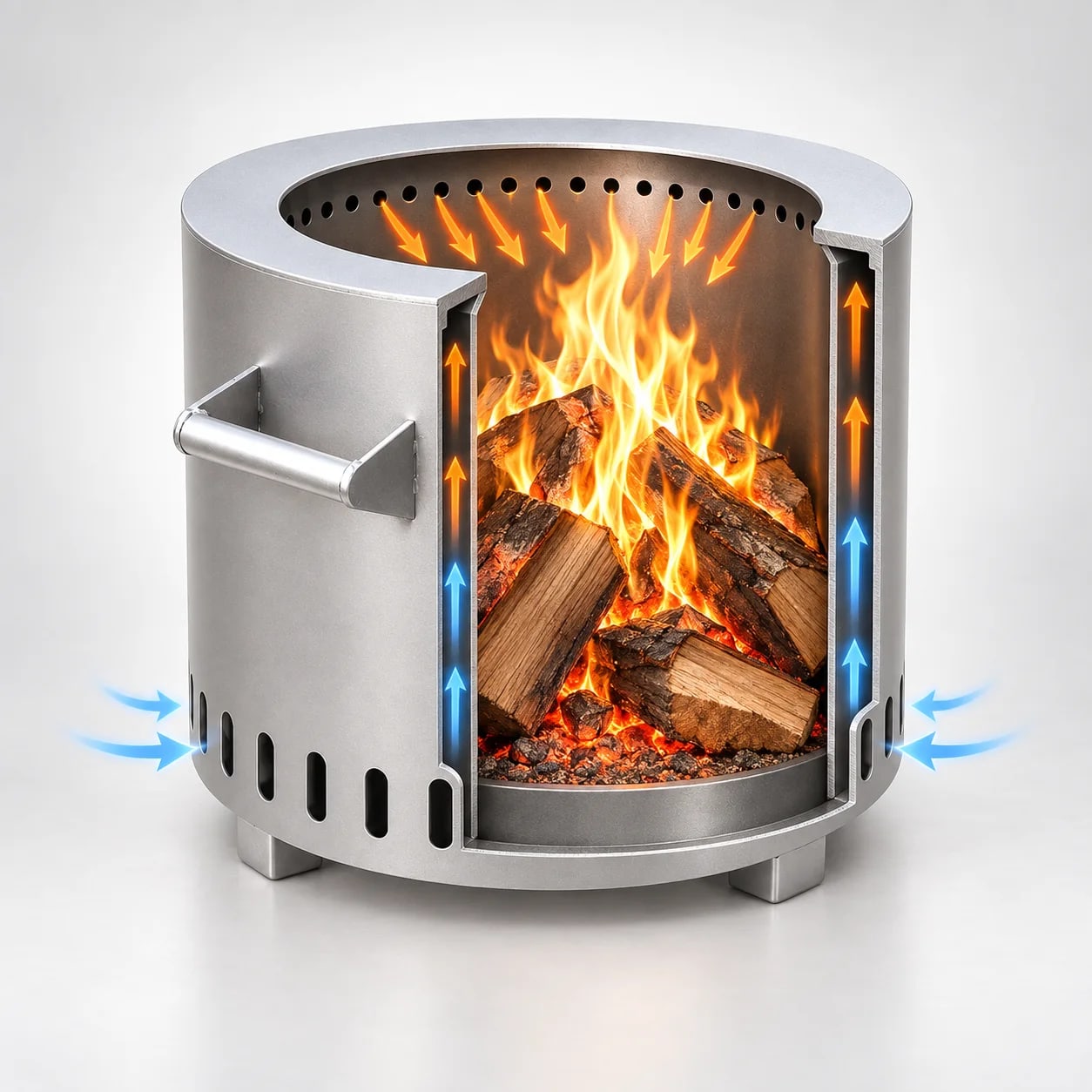
The space between the two walls creates a defined route for incoming air to rise and gain heat before returning to the upper combustion zone.
FORM / AIR / FIREKindling establishes the first flame and begins drawing air through the lower openings.
Tap to play.
Combustion engineering becomes physical through carefully cut openings, formed steel, joined components, functional hardware and a finish prepared for real fire.
Ventilation openings, panel edges and locking details begin as deliberate cuts.
Flat metal becomes the body, wall, chamber or structural panel the fire needs.
Tabs, joints, handles and formed parts establish the working geometry.
Surfaces are prepared for use while every opening and edge remains functional.
The physical object meets the airflow and heat path it was designed around.
Manufacturing decisions preserve the openings, paths and structural relationships that make each ESFIRE product work as intended.